
Tasmanian giant freshwater crayfish (Astacopsis gouldi)
This unique species can live for up to 60 years and grow to the size of a small dog. Yet despite its size and longevity, the giant frewshwater crayfish is endangered, its populations diminished by illegal fishing, habitat loss, and climate change.

Tasmanian giant freshwater crayfish
Giant freshwater lobster
Astacopsis gouldi
Parastacidae
The Tasmanian giant freshwater crayfish is the largest freshwater invertebrate in the world. They are a heavily built, spiny crayfish with large, distinct front pincers.
Up to 80 cm in length and up to 6 kg in weight.
It's large size and often blueish colour.
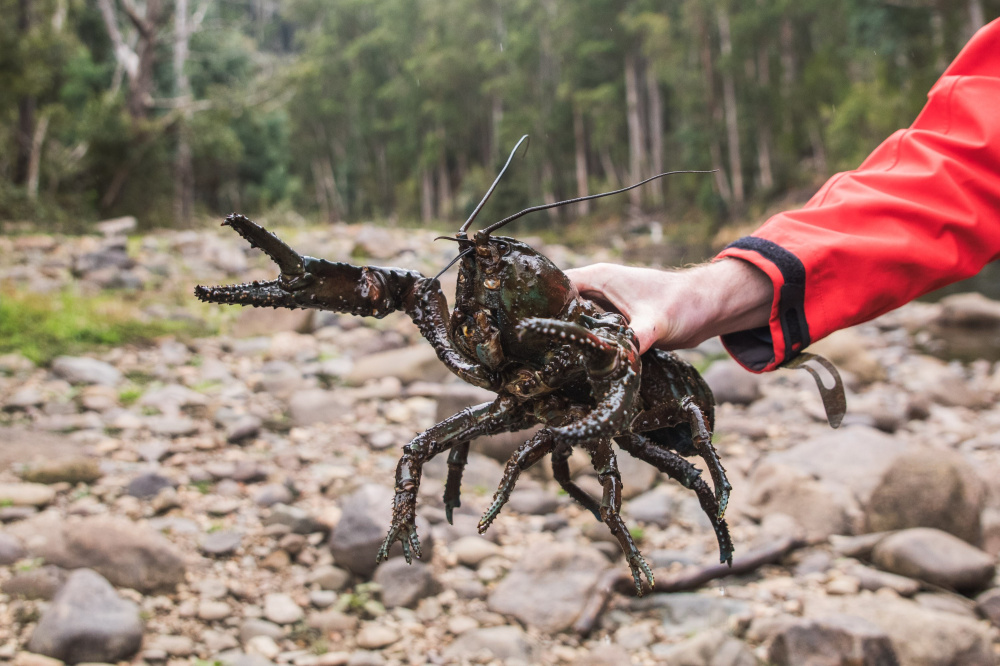
Photo: Tilde Bergstrom
These animals can live for up to 80 years, making them among the longest-lived freshwater invertebrates on Earth.
Cool, clean streams containing snags, pools and undercut banks, with native vegetation lining the banks.
Diet consists predominantly of decaying wood, leaves and their associated microbes, supplemented by small fish, insects, and rotting animal matter when available.
Mating and spawning occur in autumn, with eggs hatching the following summer and remaining attached to the female until May. Females breed only once every two years.
This species is endemic to northern Tasmania.
Endangered
Habitat loss and disturbance, sedimentation of waterways, modifications to water flow, illegal fishing, and climate change.
Frequently asked questions about the Tasmanian giant freshwater crayfish (Astacopsis gouldi)
What does the Tasmanian giant freshwater crayfish (Astacopsis gouldi) eat?
Diet consists predominantly of decaying wood, leaves and their associated microbes, supplemented by small fish, insects, and rotting animal matter when available.
Where can I see the Tasmanian giant freshwater crayfish (Astacopsis gouldi) in Tasmania?
This species is endemic to northern Tasmania.
Is the Tasmanian giant freshwater crayfish (Astacopsis gouldi) endangered?
Endangered
What does the Tasmanian giant freshwater crayfish (Astacopsis gouldi) look like?
It's large size and often blueish colour. Photo: Tilde Bergstrom
Where does the Tasmanian giant freshwater crayfish (Astacopsis gouldi) live?
Cool, clean streams containing snags, pools and undercut banks, with native vegetation lining the banks.
What threats does the Tasmanian giant freshwater crayfish (Astacopsis gouldi) face?
Habitat loss and disturbance, sedimentation of waterways, modifications to water flow, illegal fishing, and climate change.
How does the Tasmanian giant freshwater crayfish (Astacopsis gouldi) breed and reproduce?
Mating and spawning occur in autumn, with eggs hatching the following summer and remaining attached to the female until May. Females breed only once every two years.
You might like...
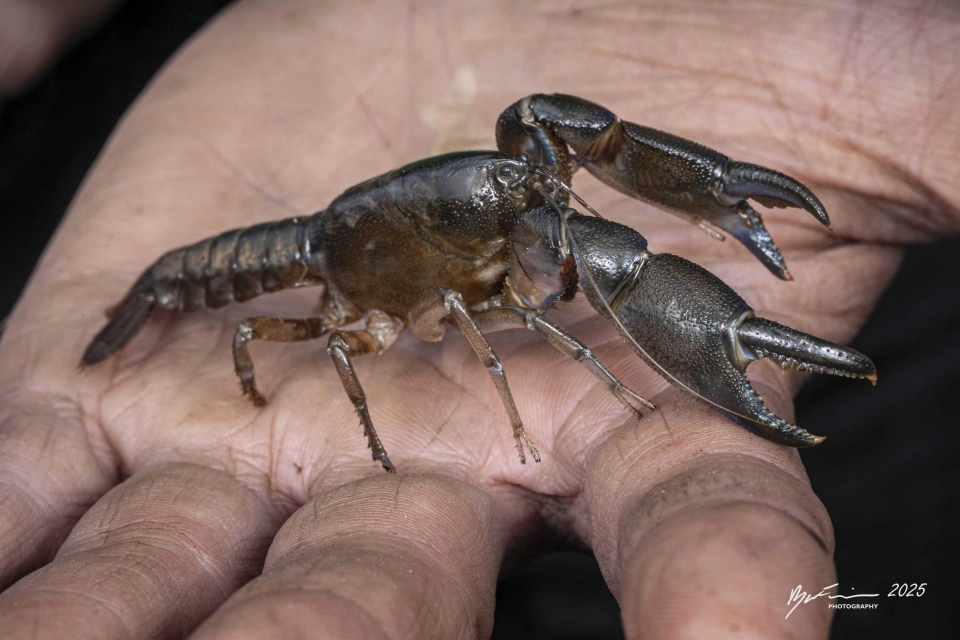
Burrowing crayfish - the hidden ecological engineers
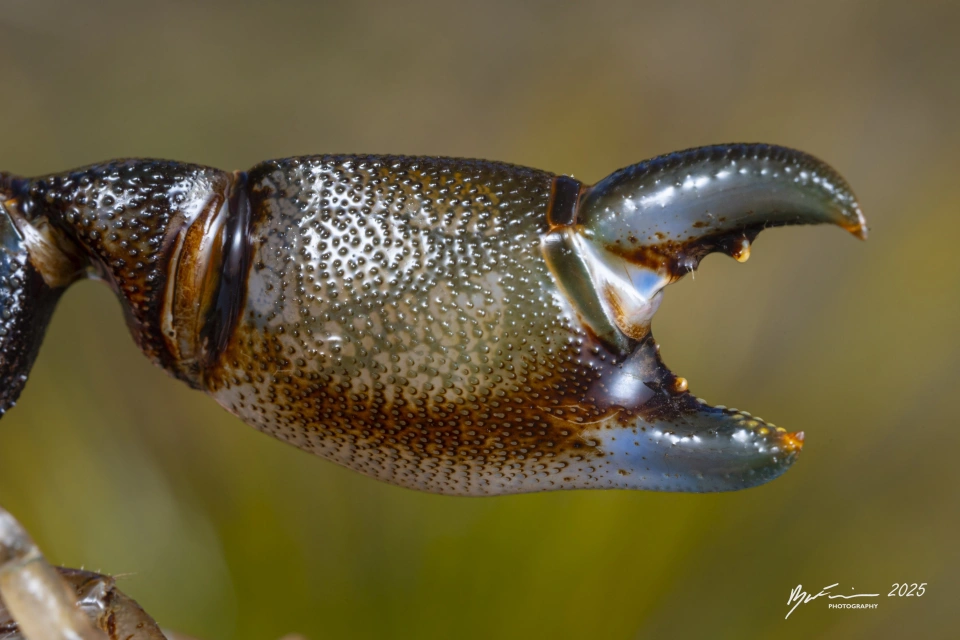
$30,000 and teaspoon of soil could protect Tasmania's Nationally Threatened Burrowing Crayfish
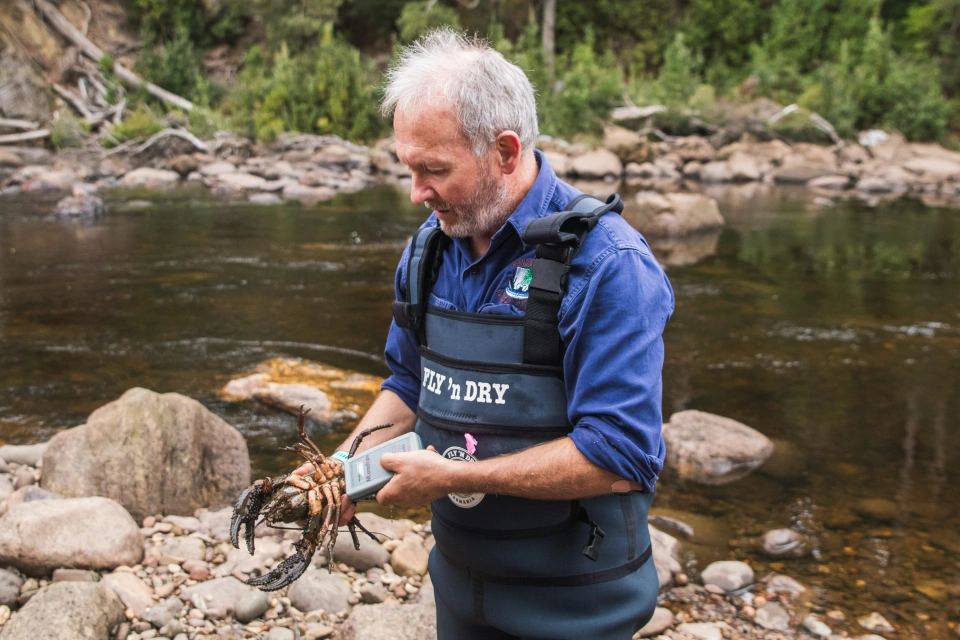
Giant freshwater crayfish surveying with Todd Walsh
Tasmanian Devil
The Tasmanian Devil, the largest carnivorous marsupial in the world, is a true icon for the Tasmanian state.
Newsletter
Sign up to keep in touch with articles, updates, events or news from Kuno, your platform for nature