
Burrowing crayfish - the hidden ecological engineers
The marine crayfish ancestors were burrowers, digging into mud for protection and to find food, and freshwater crayfish have retained that habit.
Even river- and lake- dwelling crayfish, such as the Tasmanian giant freshwater crayfish, Astacopsis gouldi, and its relatives, make short burrows, or in the case of the giant crayfish, underwater caves in the banks.
Crayfish breathe through gills under their carapace that must be kept wet to function well. Water supply is no problem in a river, but as crayfish colonised swamps and drier habitats, maintaining a water supply became increasingly important.
A burrow is the key to accessing this vital resource.

We recognise three types of crayfish burrow, depending on how they gain their water supply.
The simplest types are found in and around surface water bodies: rivers, streams and lakes. Here the burrows may be either be completely under water (type 1a), or they may have some entrances below water and some above (type 1b). So even these fully aquatic crayfish sometimes walk on land, but only the larger ones can spend any time there.
Away from surface water, crayfish can get their water either by digging down to it, or by collecting it from the surface.
Most burrowing crayfish dig type 2 burrows, that is ones that descend far enough to reach the water table and follow it down as deep as it goes. In swampy ground these burrows may only be a few centimetres deep, but some burrowers have colonised areas where the water table may sink well below the surface in dry seasons; in such places burrows two or more metres deep are not uncommon.
The recently discovered Excavator crayfish, Engaeus excavator, digs burrow approaching three metres depth in paddocks in the central north of Tasmania.

Where rainfall levels are high and soils are clayey and impervious, a few species construct what are the most terrestrial burrows of any crayfish, world-wide. Type 3 burrows are entirely above the water table; rather than digging down to water they collect surface run-off in underground cisterns.
These chambers hold water in the clay soil and may be quite large, even football-sized.
The rest of the burrow system spreads out not far below the surface, and the crayfish can move through these tunnels collecting food, occasionally returning to the cistern to wet its gills. The Cistern crayfish, Engaeus cisternarius, was the first crayfish recognised to produce type 3 burrows, but since then we have found that several other Tasmanian Engaeus species make them as well.
Only a few other Engaeus species in southeast Australia make these burrows that are the furthest penetration into the terrestrial world that crayfish have made. So far!

Some crayfish burrows are short-lived, while others outlive their occupants, perhaps for many generations. It all depends on how stable the soil is.
The sloppy soil of a swamp is constantly falling in, so that burrows have to be cleared regularly, but i consolidated clays, and especially peat soils, the burrows are much more persistent.
Western Tasmania has extensive deposits of peat soils that are home to the rain crayfish in the genera Ombrastacoides and Spinastacoides. These peats can be dug out as solid blocks just as the peats are harvested for fuel, in Ireland for example, so the burrows last a very long time.
When we surveyed burrow entrances, mostly of the Huon crayfish, Ombrastacoides huonensis, we found almost no change at all over many years, longer than the life span of the crayfish.
It seems that the crayfish population is steady and that each young crayfish must find an empty burrow to make its home.

These semi-permanent burrows are significant features in the ecosystem, draining the soil and allowing oxygen to penetrate, both of which encourage the growth of roots.
Maybe the crayfish are even farming plants roots to eat? The burrows are also habitat for other animals, insects and crustaceans, and are occasionally visited by larger animals such as snakes and frogs.
All this means that burrowing crayfish are ecological engineers, just like termites or reef-building corals, making important structures in their environment that have benefits for other organisms. The underground lives of crayfish, and what goes on in their burrows, are fascinating, but frustratingly difficult to observe.
What’s more, several of Tasmania’s crayfish are officially threatened, and climate change is likely to have an impact on many others, especially in western Tasmania, where drier summers may well eliminate some rain crayfish from shallower peat soils.

Protect Tasmania

Alastair Richardson
The marine crayfish ancestors were burrowers, digging into mud for protection and to find food, and freshwater crayfish have retained that habit.
Even river- and lake- dwelling crayfish, such as the Tasmanian giant freshwater crayfish, Astacopsis gouldi, and its relatives, make short burrows, or in the case of the giant crayfish, underwater caves in the banks.
Crayfish breathe through gills under their carapace that must be kept wet to function well. Water supply is no problem in a river, but as crayfish colonised swamps and drier habitats, maintaining a water supply became increasingly important.
A burrow is the key to accessing this vital resource.
We recognise three types of crayfish burrow, depending on how they gain their water supply.
The simplest types are found in and around surface water bodies: rivers, streams and lakes. Here the burrows may be either be completely under water (type 1a), or they may have some entrances below water and some above (type 1b). So even these fully aquatic crayfish sometimes walk on land, but only the larger ones can spend any time there.
Away from surface water, crayfish can get their water either by digging down to it, or by collecting it from the surface.
Most burrowing crayfish dig type 2 burrows, that is ones that descend far enough to reach the water table and follow it down as deep as it goes. In swampy ground these burrows may only be a few centimetres deep, but some burrowers have colonised areas where the water table may sink well below the surface in dry seasons; in such places burrows two or more metres deep are not uncommon.
The recently discovered Excavator crayfish, Engaeus excavator, digs burrow approaching three metres depth in paddocks in the central north of Tasmania.
Where rainfall levels are high and soils are clayey and impervious, a few species construct what are the most terrestrial burrows of any crayfish, world-wide. Type 3 burrows are entirely above the water table; rather than digging down to water they collect surface run-off in underground cisterns.
These chambers hold water in the clay soil and may be quite large, even football-sized.
The rest of the burrow system spreads out not far below the surface, and the crayfish can move through these tunnels collecting food, occasionally returning to the cistern to wet its gills. The Cistern crayfish, Engaeus cisternarius, was the first crayfish recognised to produce type 3 burrows, but since then we have found that several other Tasmanian Engaeus species make them as well.
Only a few other Engaeus species in southeast Australia make these burrows that are the furthest penetration into the terrestrial world that crayfish have made. So far!
Some crayfish burrows are short-lived, while others outlive their occupants, perhaps for many generations. It all depends on how stable the soil is.
The sloppy soil of a swamp is constantly falling in, so that burrows have to be cleared regularly, but i consolidated clays, and especially peat soils, the burrows are much more persistent.
Western Tasmania has extensive deposits of peat soils that are home to the rain crayfish in the genera Ombrastacoides and Spinastacoides. These peats can be dug out as solid blocks just as the peats are harvested for fuel, in Ireland for example, so the burrows last a very long time.
When we surveyed burrow entrances, mostly of the Huon crayfish, Ombrastacoides huonensis, we found almost no change at all over many years, longer than the life span of the crayfish.
It seems that the crayfish population is steady and that each young crayfish must find an empty burrow to make its home.
These semi-permanent burrows are significant features in the ecosystem, draining the soil and allowing oxygen to penetrate, both of which encourage the growth of roots.
Maybe the crayfish are even farming plants roots to eat? The burrows are also habitat for other animals, insects and crustaceans, and are occasionally visited by larger animals such as snakes and frogs.
All this means that burrowing crayfish are ecological engineers, just like termites or reef-building corals, making important structures in their environment that have benefits for other organisms. The underground lives of crayfish, and what goes on in their burrows, are fascinating, but frustratingly difficult to observe.
What’s more, several of Tasmania’s crayfish are officially threatened, and climate change is likely to have an impact on many others, especially in western Tasmania, where drier summers may well eliminate some rain crayfish from shallower peat soils.
Love what you're reading? Support Protect Tasmania donate to support them now
Donate hereYou might like...
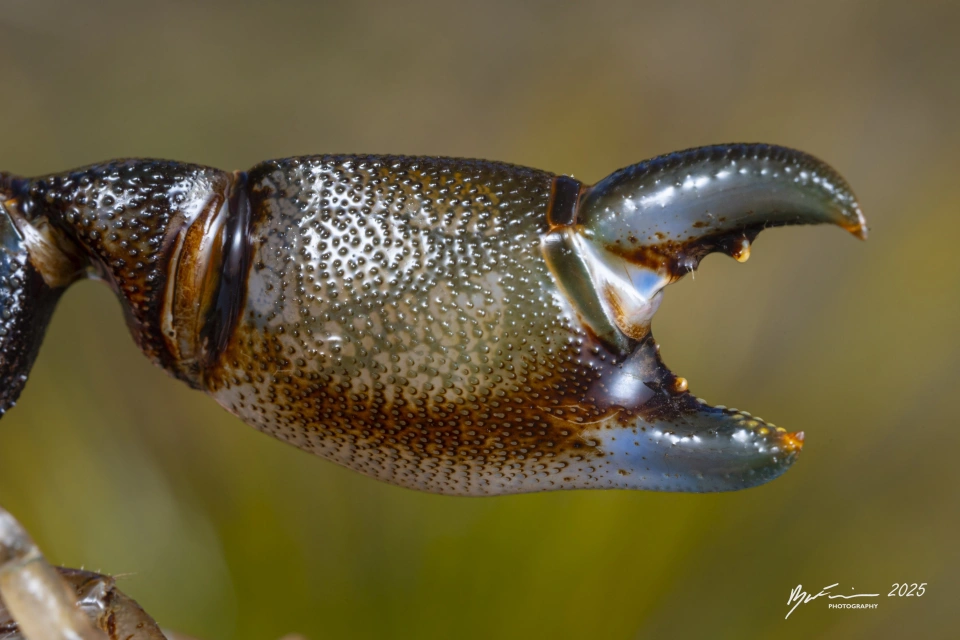
$30,000 and teaspoon of soil could protect Tasmania's Nationally Threatened Burrowing Crayfish
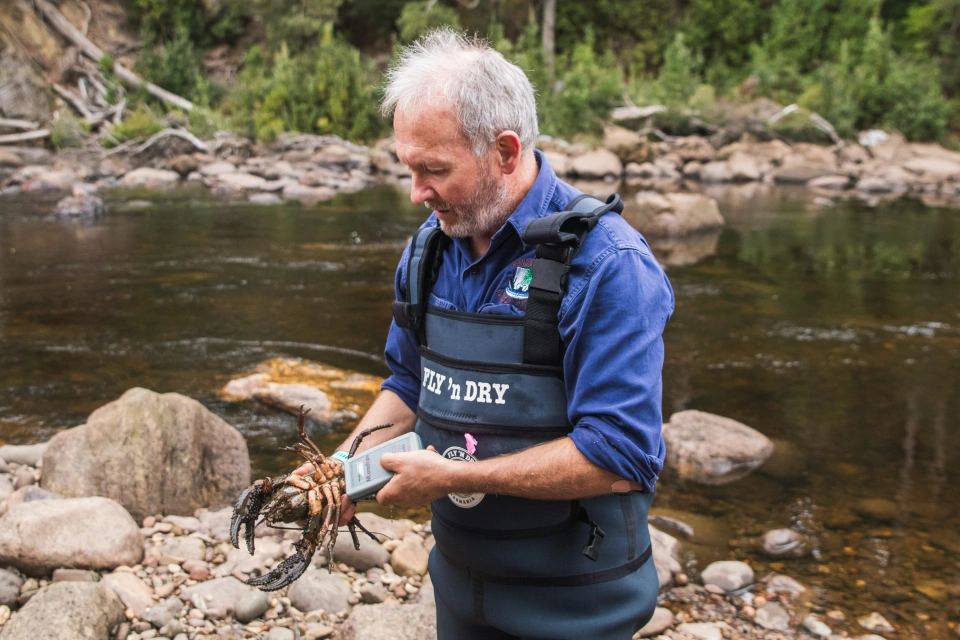
Giant freshwater crayfish surveying with Todd Walsh

Dr Sally Bryant: a lifetime in the field
Threatened species: don't wait, act now
Newsletter
Sign up to keep in touch with articles, updates, events or news from Kuno, your platform for nature