
Tasmanian Devil
The Tassie devil is a stocky, black-furred animal with a powerful bite that can only be found on the island state of Tasmania. They are nocturnal, primarily scavengers, and have a reputation for their loud, menacing screams and fierce growls.

Tasmanian Devil
Sarcophilus
Dasyurids
The unique "Tassie devils" have stocky bodies, large heads and white stripes on their chest. They have a medium length tail and powerful teeth.
A male Tasmanian devils usually weigh up to 14 kg while a female is much smaller weighing around 6-7 kg.
They often have one or a few white stripes accross their chest, sometimes extending to the sides or back.
The Tasmanian devil got its name from european settlers. They heard its loud screeching in the night and thought it sounded like the devil himself.
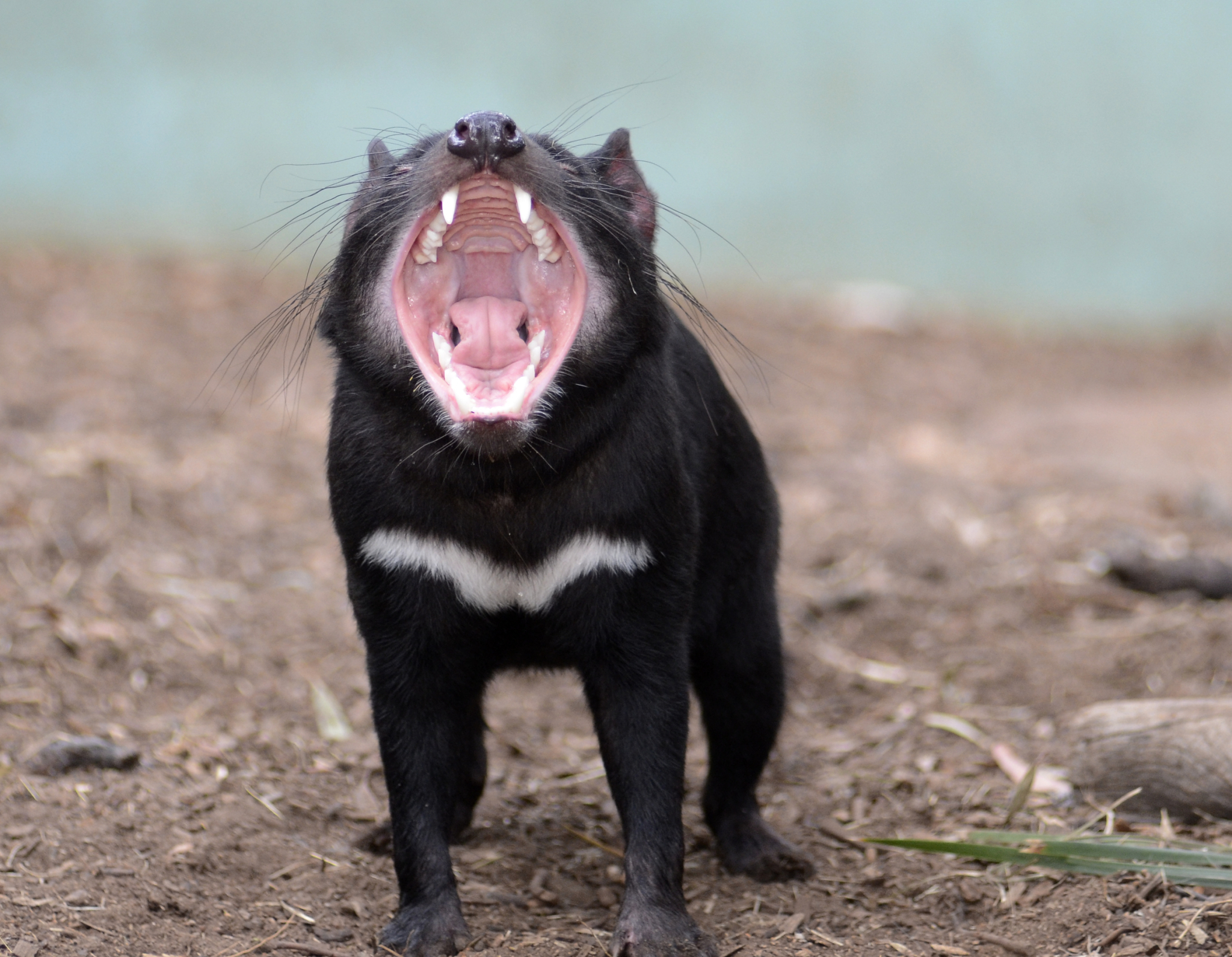
The devils have extremely strong jaws with bone-crushing abilities. Photo: Dan Broun
They like shaded or enclosed forests.
Tasmanian devils are mainly scavengers, feeding upon the carcasses of dead animals. When the thylacine still existed it is believed they had a co-existig relation with the devils, where the thylacine would kill things like small birds, wallabies and other small mammals, the thylacine would eat their fill and then the Tasmanian devil would come and eat anything that was left, including the bones and furs.
The devils mate between January and June. After only a 21-22 days gestation period around 22 blind joeys are born. As there are only four nipples in the pouch, competition is fierce, and only a few of the newborns survive.
Tasmanian devils are all over Tasmania, but especially in more wild places like Cradle Mountain-Lake St Clair National Park and Maria Island National Park.
Endangered
The survival of Tasmanian devils is seriously threatened by Devil Facial Tumour Disease which develops rapidly and is fatal. Once the highly infectious cancerous tumours appear around the mouth, face and neck, the devils generally die within three to six months. There are several programs led by the Tasmanian government trying to stop the spread of this disease.
A sort of a yowling or a screeching sound. Tasmanian devils are nocturnal, so you would most likely hear them at night.
Frequently asked questions about the Tasmanian Devil
What does the Tasmanian Devil eat?
Tasmanian devils are mainly scavengers, feeding upon the carcasses of dead animals. When the thylacine still existed it is believed they had a co-existig relation with the devils, where the thylacine would kill things like small birds, wallabies and other small mammals, the…
Where can I see the Tasmanian Devil in Tasmania?
Tasmanian devils are all over Tasmania, but especially in more wild places like Cradle Mountain-Lake St Clair National Park and Maria Island National Park.
Is the Tasmanian Devil endangered?
Endangered
What does the Tasmanian Devil look like?
They often have one or a few white stripes accross their chest, sometimes extending to the sides or back.
Where does the Tasmanian Devil live?
They like shaded or enclosed forests.
What threats does the Tasmanian Devil face?
The survival of Tasmanian devils is seriously threatened by Devil Facial Tumour Disease which develops rapidly and is fatal. Once the highly infectious cancerous tumours appear around the mouth, face and neck, the devils generally die within three to six months. There are…
How does the Tasmanian Devil breed and reproduce?
The devils mate between January and June. After only a 21-22 days gestation period around 22 blind joeys are born. As there are only four nipples in the pouch, competition is fierce, and only a few of the newborns survive.
You might like...
Bennett's Wallaby
Bennett’s wallaby, also known as the Red-necked wallaby, is a medium-sized marsupial native to Tasmania and eastern Australia. Photo: Valeriia Miller

Dr Sally Bryant: a lifetime in the field

Ecology of the Neck
Newsletter
Sign up to keep in touch with articles, updates, events or news from Kuno, your platform for nature