
Life on Earth •
Conservation •
Kuno Foundation •
Fostering Love of Earth •
Kids & Nature Program •
Bruny Island
Bruny Youth Stories Prize
Bruny Island

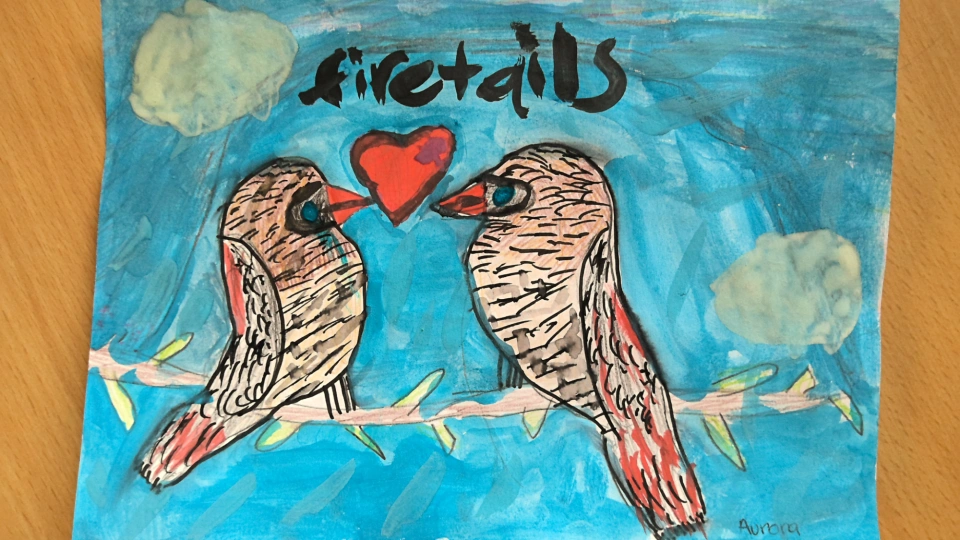
Here are some facts about the forty spotted pardalotes.
Forty spotted pardalotes are listed as an endangered species,
Their population has declined by 60% over the last 17 years due to habitat loss.
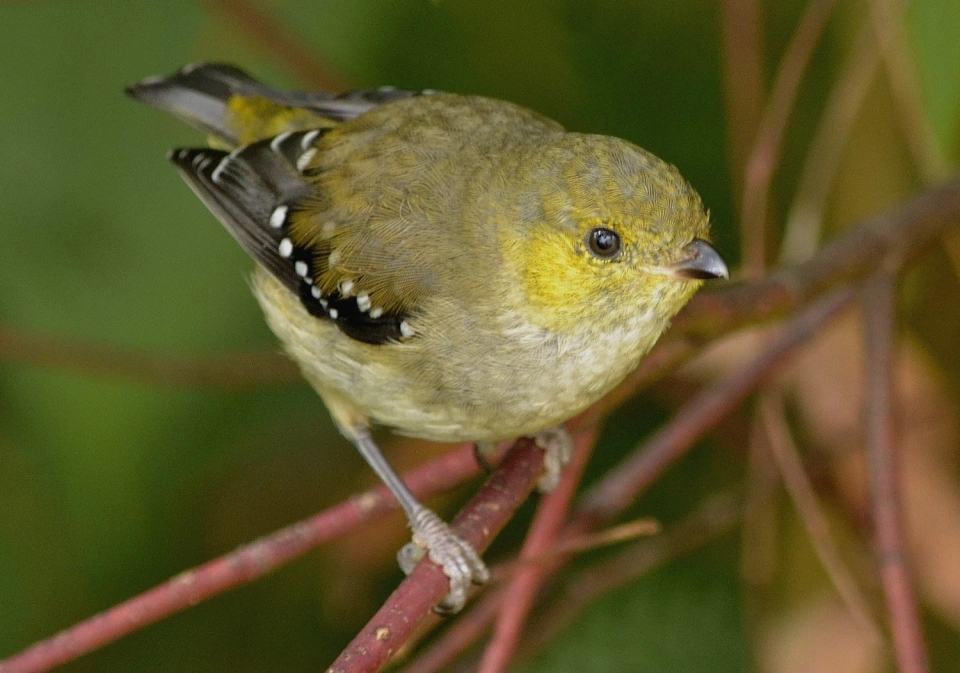
Forty spotted pardalotes are olive green with white spots on black wings, a yellowish-white belly and a short tail.
These birds are found in dry eucalypt forests with 99% of the population restricted to Maria and Bruny islands and a few small fragmented populations remaining on the Tasmanian mainland.
The forty spotted pardalotes love to snack on lerps, psyllids and other insects gleaned from the foliage of eucalypt trees.
When nesting they like to nest in hollow trees usually high up in old
eucalyptus and white gum trees.
They make their nests with bark,feathers and soft plant materials.
Forty spotted pardalotes lay around 3-5 eggs per clutch.
These are some facts about the forty spotted pardalotes.
Winners of the Bruny Youth Story Prize will be announced at The Bruny Island Bird Festival on Sunday, the 22nd of March at 12 pm in the Adventure Bay hall. This prize is proudly brought to you by The Bruny Kids and Nature Project, led by Claire Boost and the Tasmanian Community Fund.
Here are some facts about the forty spotted pardalotes.
Forty spotted pardalotes are listed as an endangered species,
Their population has declined by 60% over the last 17 years due to habitat loss.
Forty spotted pardalotes are olive green with white spots on black wings, a yellowish-white belly and a short tail.
These birds are found in dry eucalypt forests with 99% of the population restricted to Maria and Bruny islands and a few small fragmented populations remaining on the Tasmanian mainland.
The forty spotted pardalotes love to snack on lerps, psyllids and other insects gleaned from the foliage of eucalypt trees.
When nesting they like to nest in hollow trees usually high up in old
eucalyptus and white gum trees.
They make their nests with bark,feathers and soft plant materials.
Forty spotted pardalotes lay around 3-5 eggs per clutch.
These are some facts about the forty spotted pardalotes.
Winners of the Bruny Youth Story Prize will be announced at The Bruny Island Bird Festival on Sunday, the 22nd of March at 12 pm in the Adventure Bay hall. This prize is proudly brought to you by The Bruny Kids and Nature Project, led by Claire Boost and the Tasmanian Community Fund.
Love what you're reading? Support Bruny Kids & Nature donate to support them now
Donate hereYou might like...
Bruny Youth Stories Prize
Bruny Youth Stories Prize
Bruny Youth Stories Prize
Newsletter
Sign up to keep in touch with articles, updates, events or news from Kuno, your platform for nature