
Leadbeater's Possum
The Leadbeater's possum depends on old-growth mountain ash forests, especially large hollow-bearing trees used for nesting, alongside dense understorey that supports the insects and sap it feeds on. Because these hollows take more than a century to form, Leadbeater’s possum is especially vulnerable to logging, bushfires, and habitat fragmentation.

Leadbeater's Possum
Fairy Possum
Gymnobelideus leadbeateri
Petauridae
The Leadbeater's Possum is a small, grey-brown marsupial with a dark stripe down its back, large eyes, and a club-shaped tail.
Adults grow around 32 cm tall including the tail. They way under 200 grams, which is less than a regular apple.
The distinct black stripe that runs down its grey-brown back.
Leadbeater's Possums live in small, matriarchal colonies with up to 12 individuals in each colony. They have a strong, female-dominated society, with females aggressively defending their territory.
They need old, hollow-bearing trees for denning and nesting. In the Victorian Central Highlands, these tree hollows form in large Mountain Ash trees that are older than 150 years. The Leadbeater's possum also requires dense wattle undergrowth for safe travel and food.
Leadbeater's possums are omnivores whose diet relies heavily on sweet plant exudates like wattle and eucalypt sap, nectar, and honeydew, and they also hunt invertebrates such as tree crickets, moths, beetles, and spiders.
They breed in monogamous family groups within tree hollows, typically producing 1-2 young per year.
Until recently, Leadbeater's possums were thought to live exclusively in Victoria, with two main populations; one in the central highlands mountain ash forests, and one small population in the lowland swamp forests of the Yellingbo Nature Conservation Reserve. However, in June 2025 a population was discovered in the Kosciusko National Park, New South Wales. This is the only known population outside Victoria.
Critically Endangered
The main threat to the Leadbeater's possum is habitat loss due to logging, bushfires and human development, removing large, old trees that are crucial for the possum to nest. Other threats include climate change and predation by introduced species like foxes and cats.
Frequently asked questions about the Leadbeater's Possum
What does the Leadbeater's Possum eat?
Leadbeater's possums are omnivores whose diet relies heavily on sweet plant exudates like wattle and eucalypt sap, nectar, and honeydew, and they also hunt invertebrates such as tree crickets, moths, beetles, and spiders.
Where can I see the Leadbeater's Possum in Tasmania?
Until recently, Leadbeater's possums were thought to live exclusively in Victoria, with two main populations; one in the central highlands mountain ash forests, and one small population in the lowland swamp forests of the Yellingbo Nature Conservation Reserve. However, in June…
Is the Leadbeater's Possum endangered?
Critically Endangered
What does the Leadbeater's Possum look like?
The distinct black stripe that runs down its grey-brown back.
Where does the Leadbeater's Possum live?
They need old, hollow-bearing trees for denning and nesting. In the Victorian Central Highlands, these tree hollows form in large Mountain Ash trees that are older than 150 years. The Leadbeater's possum also requires dense wattle undergrowth for safe travel and food.
What threats does the Leadbeater's Possum face?
The main threat to the Leadbeater's possum is habitat loss due to logging, bushfires and human development, removing large, old trees that are crucial for the possum to nest. Other threats include climate change and predation by introduced species like foxes and cats.
How does the Leadbeater's Possum breed and reproduce?
They breed in monogamous family groups within tree hollows, typically producing 1-2 young per year.
You might like...

Make It Happen! A Great Forest National Park Short Film
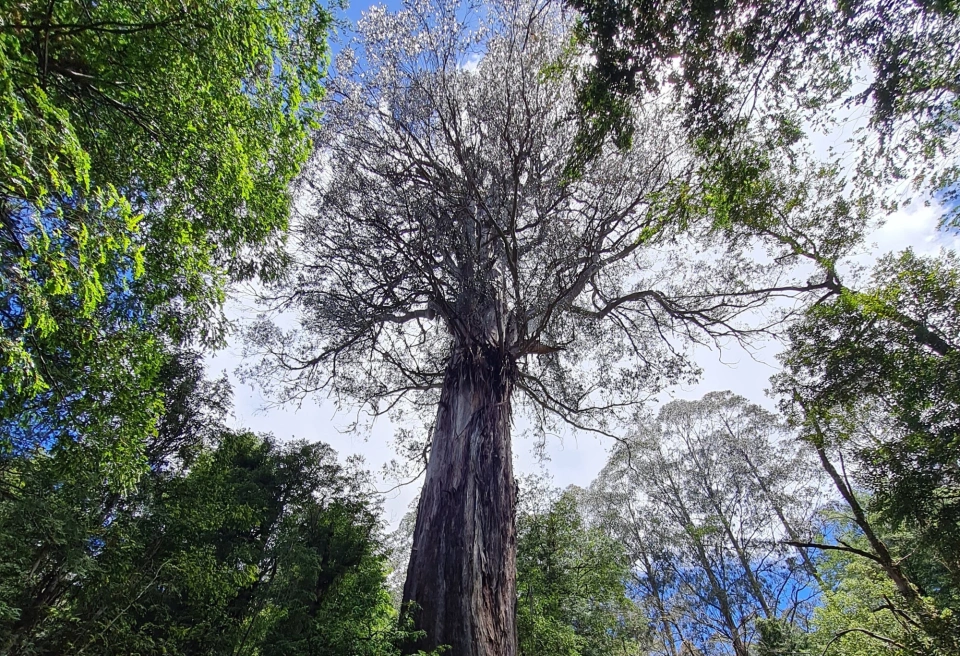
Ancient beauty in Victoria's central highlands
Newsletter
Sign up to keep in touch with articles, updates, events or news from Kuno, your platform for nature