
It starts with your own backyard: fighting for marine protection in Sydney Harbour
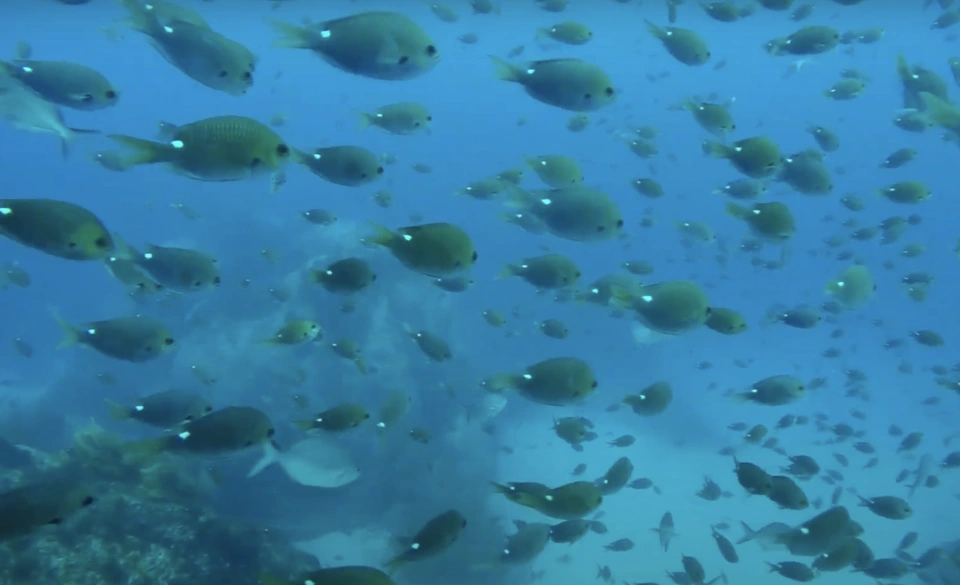
Comparing Wyargine to Cabbage Tree Bay, an existing aquatic reserve at Manly in Sydney, Duncan is struck by the difference. While Cabbage Tree Bay teems with schools of giant fish, groper and dusky whaler sharks, at Wyargine he only spots the occasional marine animal. This contrast contributed to Duncan's motivation to start Wyargine Aquatic Friends.
"I know the endorphin rush we get when we swim here, but when we see sea life, people’s faces just light up," he says.
"Those are the moments when you know that what we're trying to do has value."
His vision is clear: "My vision would be to mirror what's happening in Cabbage Tree Bay, that abundance of sea life, kelp beds regrowing."

Marine health in a large city
Protecting and restoring natural places in a city like Sydney matters not just for biodiversity, but for people too. "Bringing nature into the city is vitally important," Duncan says.
"We live in big cities and we're building them larger, building higher apartment complexes. We need nature in and around us for our mental health and the health of our cities."
Sydney's oceans, he argues, have long been overlooked. "We've got wonderful bushland around Sydney, but our waterways have been neglected enormously. Without healthy waterways, we don't have a healthy planet. If our oceans die, the planet dies."

Larger goal
The goal of a local reserve also connects to much larger ambitions. "There's a global vision called 30 by 30, 30% of the world's oceans to be marine reserves by 2030. That's a fabulous goal, especially given we're sitting at about 7% at the moment,” Duncan says.
“What we're doing here is creating a portal into what marine parks and aquatic reserves can do. If people can walk down here on a weekend and see how quickly biodiversity improves in their own backyard, it becomes much easier to convince them to preserve larger areas of the ocean offshore."

Everyone can do something
Getting there won't be simple. "Change is always difficult. Governments will only act once there's enough community behind something, once they know it's worth spending their political capital on." But Duncan is optimistic that once people understand the proposal, they will be on board. "Once people understand what we're trying to achieve, I think they'll recognise the benefits."
For Duncan, the bigger picture starts small.
"I've recognised that whilst I might not be able to create a reserve the size of the Great Barrier Reef, I can do something in my own backyard. And I think that's what it takes, a lot of people each doing something in their own little area."
Comparing Wyargine to Cabbage Tree Bay, an existing aquatic reserve at Manly in Sydney, Duncan is struck by the difference. While Cabbage Tree Bay teems with schools of giant fish, groper and dusky whaler sharks, at Wyargine he only spots the occasional marine animal. This contrast contributed to Duncan's motivation to start Wyargine Aquatic Friends.
"I know the endorphin rush we get when we swim here, but when we see sea life, people’s faces just light up," he says.
"Those are the moments when you know that what we're trying to do has value."
His vision is clear: "My vision would be to mirror what's happening in Cabbage Tree Bay, that abundance of sea life, kelp beds regrowing."
Marine health in a large city
Protecting and restoring natural places in a city like Sydney matters not just for biodiversity, but for people too. "Bringing nature into the city is vitally important," Duncan says.
"We live in big cities and we're building them larger, building higher apartment complexes. We need nature in and around us for our mental health and the health of our cities."
Sydney's oceans, he argues, have long been overlooked. "We've got wonderful bushland around Sydney, but our waterways have been neglected enormously. Without healthy waterways, we don't have a healthy planet. If our oceans die, the planet dies."
Larger goal
The goal of a local reserve also connects to much larger ambitions. "There's a global vision called 30 by 30, 30% of the world's oceans to be marine reserves by 2030. That's a fabulous goal, especially given we're sitting at about 7% at the moment,” Duncan says.
“What we're doing here is creating a portal into what marine parks and aquatic reserves can do. If people can walk down here on a weekend and see how quickly biodiversity improves in their own backyard, it becomes much easier to convince them to preserve larger areas of the ocean offshore."
Everyone can do something
Getting there won't be simple. "Change is always difficult. Governments will only act once there's enough community behind something, once they know it's worth spending their political capital on." But Duncan is optimistic that once people understand the proposal, they will be on board. "Once people understand what we're trying to achieve, I think they'll recognise the benefits."
For Duncan, the bigger picture starts small.
"I've recognised that whilst I might not be able to create a reserve the size of the Great Barrier Reef, I can do something in my own backyard. And I think that's what it takes, a lot of people each doing something in their own little area."
Love what you're reading? Support Wyargine Aquatic Reserve Friend Inc donate to support them now
Donate hereYou might like...

Restoring Sydney Harbour’s seagrass
Sydney Harbour’s extraordinary marine biodiversity

Saving White’s Seahorse
Cities need a connection to nature
Newsletter
Sign up to keep in touch with articles, updates, events or news from Kuno, your platform for nature