
Life on Earth •
Conservation •
Kuno Foundation •
Fostering Love of Earth •
Kids & Nature Program •
Bruny Island
Bruny Youth Story Prize
Bruny Island
The Kingfisher Lord
Two men emerge through the viridian bushland.
At their feet, they find an idyllic pool of morning dew, glistening in the soft grey
daylight, and above them the first patch of blue sky since disembarking onto the
white shores of Bruny Island.
“Just enough blue to stitch a pair of sailor’s trousers,” remarks one of the men.
They resign themselves to a snaky tree branch, careful not to trample over the
metropolis of jack-jumpers underfoot. The soft curdling of the creek is starkly
different to the thunderous waters of the d'Entrecasteaux.
There is silence.
One explorer queries, “So… Do you think…?” He falters.
The other gazes around the clearing before replying.
“Yes. Yes, I think so.”
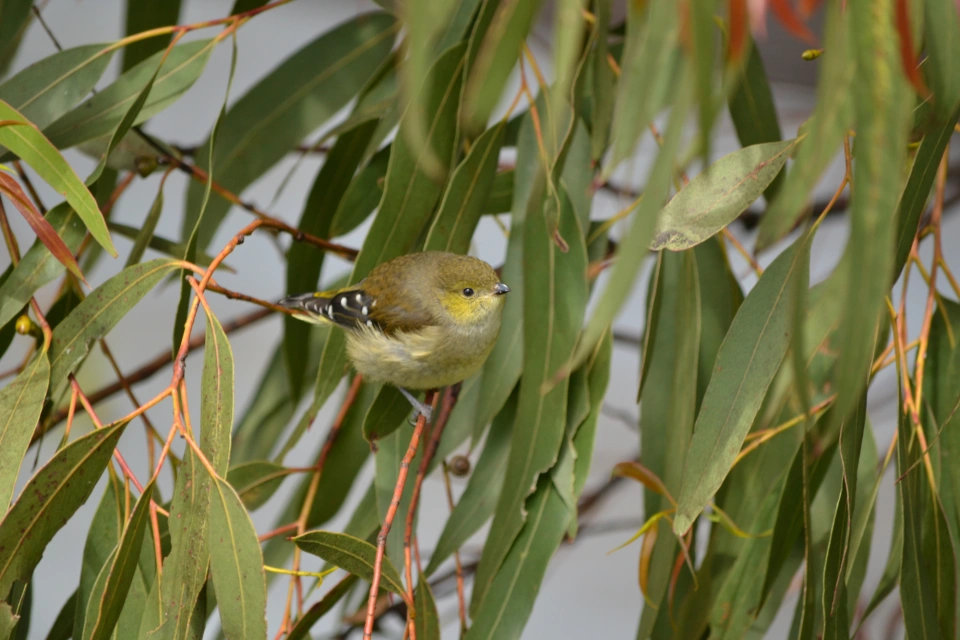
The ‘it’ they have been searching for over the past days is an elusive bird. The
Kingfisher Lord, as it is known in the nautical folklore, or the ceyx azureus
diemenensis as it is known to the Biological Institute. A great king of the south,
leader of many a wartime campaign. A songbird and a fashionista. Legend says
it is drenched in pure, vibrant colour - a yellow belly, warmed by the Tasmanian
sun and an azure back paled by its wintery winds. It exists only in stories and
scrambled watercolours.
Whoever embeds it first in film will be embedded forever in the history books.
The two men wait many hours; certain this is the spot. This creek is its throne
room.
A subtle orchestra of birdsong and the smell of gum permeate the clearing.
Suddenly, a spectral shape swoops down through the eucalyptus.
The shape of the Kingfisher Lord.
It perches.
It wears a feathery crown and has a jewel-bright beak. It is wreathed by the
arteries of daylight, which peak through the boughs of the surrounding trees.
Awestruck, one of the explorers fumbles with the bulky camera, but his fingers
shake so much, he can’t install the roll of film. There is a sense of sheer, naked
poetry in this moment.
Utter transfixion.
Of course, by the time the minute machinery inside the camera starts to whir
coherently, the bird has long passed.
This moment will live in the explorers’ minds forever, as vivid as the hues of
the Kingfisher Lord’s plumage.
Elsewhere in time, a young boy stands on the banks of the flooded Capital. A
small sailing boat lays beached on the shore. He stares into the shrubbery of
Bruny Island, thumbing through a small booklet of avian photography.
Cormorants flick through the river behind him. Foxes skirt around the dark
pines which weep over Bruny’s snowy tides.
The boy begins weaving through the crosshatched undergrowth, inhaling the
mingling scents of possum poo and wattle. The long leafy fingers of lutikuta
trees become tangled in his sandy hair. He is on a quest.
Hours pass in shades of green. The Hunter is seeking the last living Kingfisher
Lord. Finally, a wing of azure flashes in the spare bush.
His face lights up.
Winners of the Bruny Youth Story Prize will be announced at The Bruny Island Bird Festival on Sunday, the 22nd of March at 12 pm in the Adventure Bay hall. This prize is proudly brought to you by The Bruny Kids and Nature Project, led by Claire Boost and the Tasmanian Community Fund.
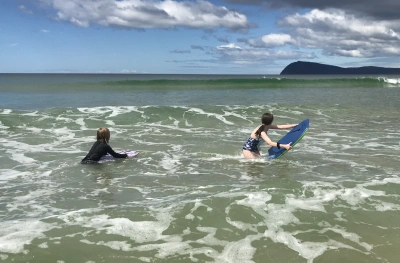
The Kingfisher Lord
Two men emerge through the viridian bushland.
At their feet, they find an idyllic pool of morning dew, glistening in the soft grey
daylight, and above them the first patch of blue sky since disembarking onto the
white shores of Bruny Island.
“Just enough blue to stitch a pair of sailor’s trousers,” remarks one of the men.
They resign themselves to a snaky tree branch, careful not to trample over the
metropolis of jack-jumpers underfoot. The soft curdling of the creek is starkly
different to the thunderous waters of the d'Entrecasteaux.
There is silence.
One explorer queries, “So… Do you think…?” He falters.
The other gazes around the clearing before replying.
“Yes. Yes, I think so.”
The ‘it’ they have been searching for over the past days is an elusive bird. The
Kingfisher Lord, as it is known in the nautical folklore, or the ceyx azureus
diemenensis as it is known to the Biological Institute. A great king of the south,
leader of many a wartime campaign. A songbird and a fashionista. Legend says
it is drenched in pure, vibrant colour - a yellow belly, warmed by the Tasmanian
sun and an azure back paled by its wintery winds. It exists only in stories and
scrambled watercolours.
Whoever embeds it first in film will be embedded forever in the history books.
The two men wait many hours; certain this is the spot. This creek is its throne
room.
A subtle orchestra of birdsong and the smell of gum permeate the clearing.
Suddenly, a spectral shape swoops down through the eucalyptus.
The shape of the Kingfisher Lord.
It perches.
It wears a feathery crown and has a jewel-bright beak. It is wreathed by the
arteries of daylight, which peak through the boughs of the surrounding trees.
Awestruck, one of the explorers fumbles with the bulky camera, but his fingers
shake so much, he can’t install the roll of film. There is a sense of sheer, naked
poetry in this moment.
Utter transfixion.
Of course, by the time the minute machinery inside the camera starts to whir
coherently, the bird has long passed.
This moment will live in the explorers’ minds forever, as vivid as the hues of
the Kingfisher Lord’s plumage.
Elsewhere in time, a young boy stands on the banks of the flooded Capital. A
small sailing boat lays beached on the shore. He stares into the shrubbery of
Bruny Island, thumbing through a small booklet of avian photography.
Cormorants flick through the river behind him. Foxes skirt around the dark
pines which weep over Bruny’s snowy tides.
The boy begins weaving through the crosshatched undergrowth, inhaling the
mingling scents of possum poo and wattle. The long leafy fingers of lutikuta
trees become tangled in his sandy hair. He is on a quest.
Hours pass in shades of green. The Hunter is seeking the last living Kingfisher
Lord. Finally, a wing of azure flashes in the spare bush.
His face lights up.
Winners of the Bruny Youth Story Prize will be announced at The Bruny Island Bird Festival on Sunday, the 22nd of March at 12 pm in the Adventure Bay hall. This prize is proudly brought to you by The Bruny Kids and Nature Project, led by Claire Boost and the Tasmanian Community Fund.
Love what you're reading? Support Bruny Kids & Nature donate to support them now
Donate hereYou might like...
Bruny Youth Story Prize
Bruny Youth Story Prize
Bruny Youth Story Prize
Newsletter
Sign up to keep in touch with articles, updates, events or news from Kuno, your platform for nature