
People can feel a bit complacent about the place because it's just like the local park or it's their backyard. But look at it, it's a 1271 meter high mountain, it's alpine at the top. It shields us from the worst of the weather, because all the rain falls up there rather than right here.
There’s a risk that we consider it more of a safe place than it really is, especially when the weather comes in.
So I really want people to learn more about the place and inform themselves about what's there so that they have a positive experience. Then they can experience the place, care about it and pass that on, share that knowledge and that experience.
So there's that complacency factor, but the other thing about it being right there is it's a wonderful resource and opportunity. And I actually think we have a responsibility as users and managers of this place, because it's often the first park that people experience when they come to Tasmania. Many people fly into Hobart, rent their car and drive straight to the top of the mountain.

And if it's the first park that they visit in Tasmania, they may not have learned about how to enjoy the place safely and sustainably.
They won't have seen the signs that say 'no drones' anywhere in the national park. And we don't have really big blue signs like parks conveying those messages really obviously. That’s deliberate, we don't want to make people feel like they're entering this really heavily regulated space. We don't want to put up more signs than necessary.
So it's understandable that people get there and they don't realize all the rules. It's a wonderful opportunity that people are going straight there, so I really think we should be using that opportunity to teach visitors and locals about the really outstanding universal values that are connected to the mountain.
We really want people to, I guess, not take it for granted, not become complacent just because it's right there.
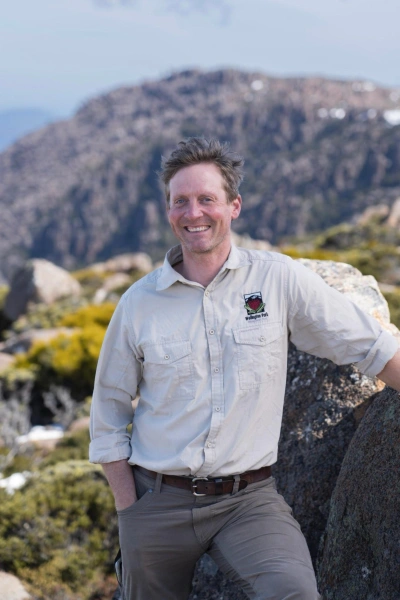
Ben Masterman
Ranger
People can feel a bit complacent about the place because it's just like the local park or it's their backyard. But look at it, it's a 1271 meter high mountain, it's alpine at the top. It shields us from the worst of the weather, because all the rain falls up there rather than right here.
There’s a risk that we consider it more of a safe place than it really is, especially when the weather comes in.
So I really want people to learn more about the place and inform themselves about what's there so that they have a positive experience. Then they can experience the place, care about it and pass that on, share that knowledge and that experience.
So there's that complacency factor, but the other thing about it being right there is it's a wonderful resource and opportunity. And I actually think we have a responsibility as users and managers of this place, because it's often the first park that people experience when they come to Tasmania. Many people fly into Hobart, rent their car and drive straight to the top of the mountain.
And if it's the first park that they visit in Tasmania, they may not have learned about how to enjoy the place safely and sustainably.
They won't have seen the signs that say 'no drones' anywhere in the national park. And we don't have really big blue signs like parks conveying those messages really obviously. That’s deliberate, we don't want to make people feel like they're entering this really heavily regulated space. We don't want to put up more signs than necessary.
So it's understandable that people get there and they don't realize all the rules. It's a wonderful opportunity that people are going straight there, so I really think we should be using that opportunity to teach visitors and locals about the really outstanding universal values that are connected to the mountain.
We really want people to, I guess, not take it for granted, not become complacent just because it's right there.
You might like...
Embraced by the mountain
From big city teacher to the Tasmanian outdoors
The Mountain Ambassador Programme: connecting families with nature
Newsletter
Sign up to keep in touch with articles, updates, events or news from Kuno, your platform for nature