
Coast to Cradle Wild Country: Gifts from the Leven River
Coast to Cradle Wild Country
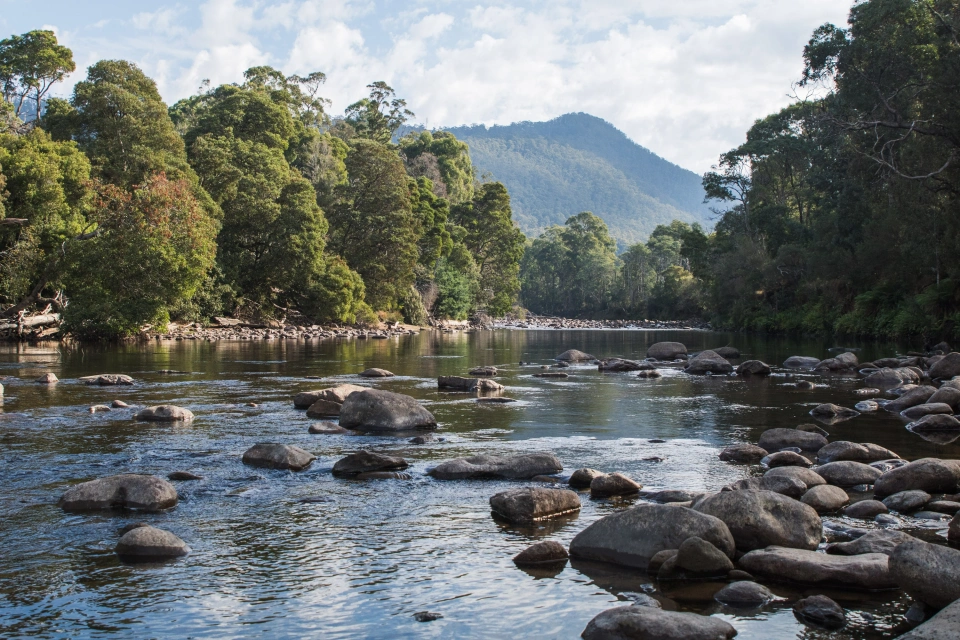
Tasmania’s Leven River provides many gifts. It is an un-dammed ‘wild’ river flowing through the Coast to Cradle Wild Country and it is the biggest wild river on the north coast of Tasmania in respect to flow, length and catchment size.
Water flow leaves evidence of erosion and deposition in the landscape, which can hint to a river’s antiquity. The ancestral Leven River has left evidence of a largely ‘relict’ river valley that was eroded when Tasmania was part of Antarctica over 34 million years ago.
Continental drift caused Tasmania to separate from Antarctica 34 to 30 million years ago. This geological event contributed to volcanic events and lava that flowed down and buried this ancient Leven River valley, trapping river sands below it.

Plant fossils buried within the old river sands indicate the presence of Gondwanan rainforest vegetation, including relatives of today’s leatherwood and conifers. The river flow continued, creating the Leven Canyon and other features in the Coast to Cradle Wild Country. Gondwanan rainforest continues to grow in parts of the Leven River catchment, and the river flow continues to shape the valleys we see today.

Today the river provides prosperity, through the creation of fertile river-flat soils supporting farms in Loongana and Gunns Plains and the water for their irrigation.
The river provides joy for anglers, rafters, swimmers and appreciators of nature and beauty.
The river provides health and wellbeing through clean drinking water for Ulverstone and surrounds.
The river provides connection for all the living things and places within the Coast to Cradle Wild Country.
How should we reciprocate the gifts the river provides?
It’s now an appropriate time to discuss the appropriate nature reserve tenure for these places and a future vision for the Coast to Cradle Wild Country.
Be a part of it, and complete the Community Survey here: https://kuno.earth/articles/community-survey-coast-to-cradle
Kuno
Tasmania’s Leven River provides many gifts. It is an un-dammed ‘wild’ river flowing through the Coast to Cradle Wild Country and it is the biggest wild river on the north coast of Tasmania in respect to flow, length and catchment size.
Water flow leaves evidence of erosion and deposition in the landscape, which can hint to a river’s antiquity. The ancestral Leven River has left evidence of a largely ‘relict’ river valley that was eroded when Tasmania was part of Antarctica over 34 million years ago.
Continental drift caused Tasmania to separate from Antarctica 34 to 30 million years ago. This geological event contributed to volcanic events and lava that flowed down and buried this ancient Leven River valley, trapping river sands below it.
Plant fossils buried within the old river sands indicate the presence of Gondwanan rainforest vegetation, including relatives of today’s leatherwood and conifers. The river flow continued, creating the Leven Canyon and other features in the Coast to Cradle Wild Country. Gondwanan rainforest continues to grow in parts of the Leven River catchment, and the river flow continues to shape the valleys we see today.
Today the river provides prosperity, through the creation of fertile river-flat soils supporting farms in Loongana and Gunns Plains and the water for their irrigation.
The river provides joy for anglers, rafters, swimmers and appreciators of nature and beauty.
The river provides health and wellbeing through clean drinking water for Ulverstone and surrounds.
The river provides connection for all the living things and places within the Coast to Cradle Wild Country.
How should we reciprocate the gifts the river provides?
It’s now an appropriate time to discuss the appropriate nature reserve tenure for these places and a future vision for the Coast to Cradle Wild Country.
Be a part of it, and complete the Community Survey here: https://kuno.earth/articles/community-survey-coast-to-cradle
You might like...
The river: Kokonnengar
Join our Coast to Cradle Open Days and Community Workshops!
Coast to Cradle Wild Country: The Film
Coast to Cradle Wild Country: Community Survey
Newsletter
Sign up to keep in touch with articles, updates, events or news from Kuno, your platform for nature