
Hooded Plover
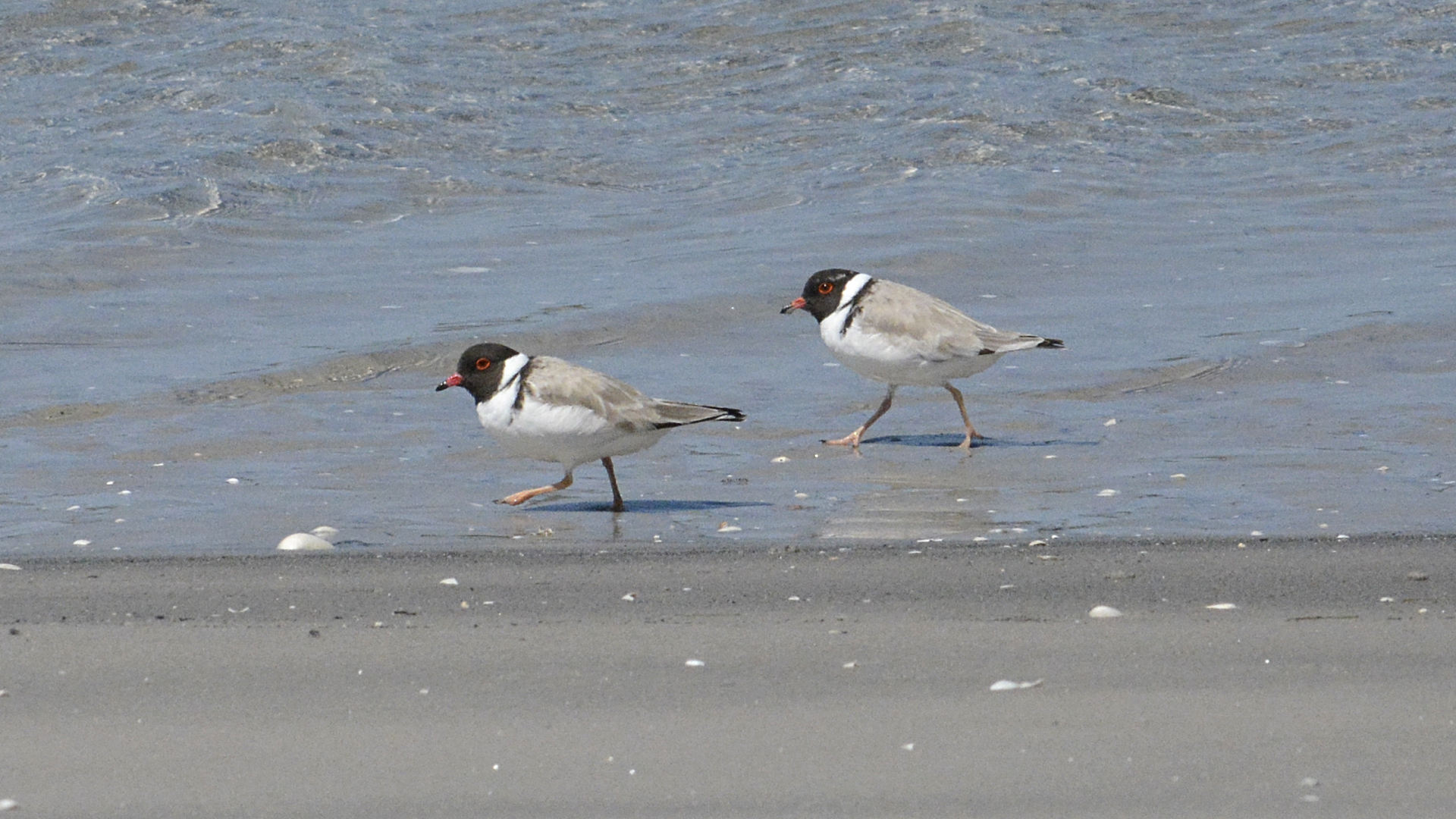
The Hooded Plover is a small, shorebird found on southern and eastern Australian coasts. It's recognized by its black "hood," white collar, and red bill. Their coastal beach habitat make them especially vulnerable to human disturbance.

Hooded Plover
Thinornis Rubricollis
Charadriidae
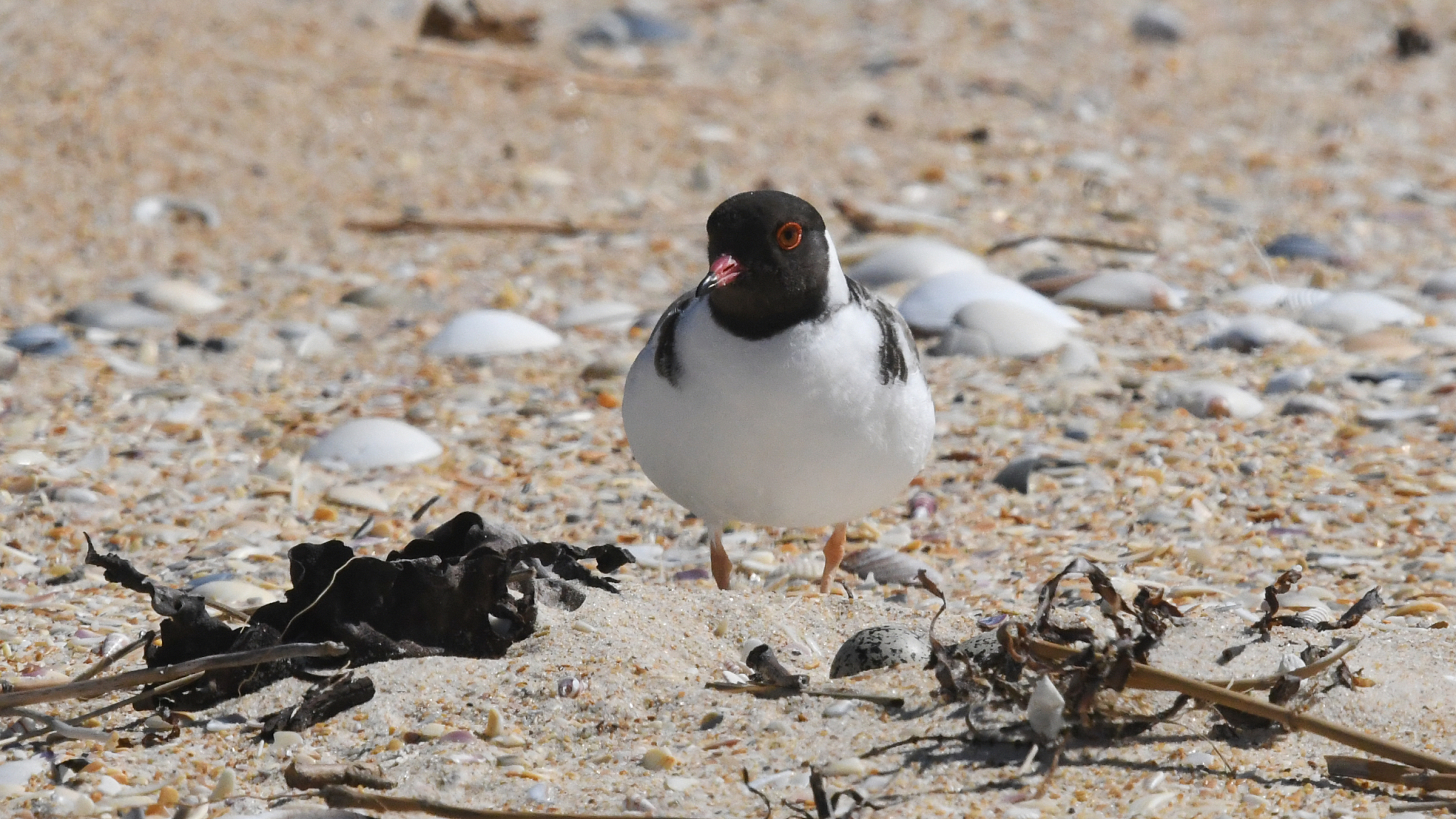
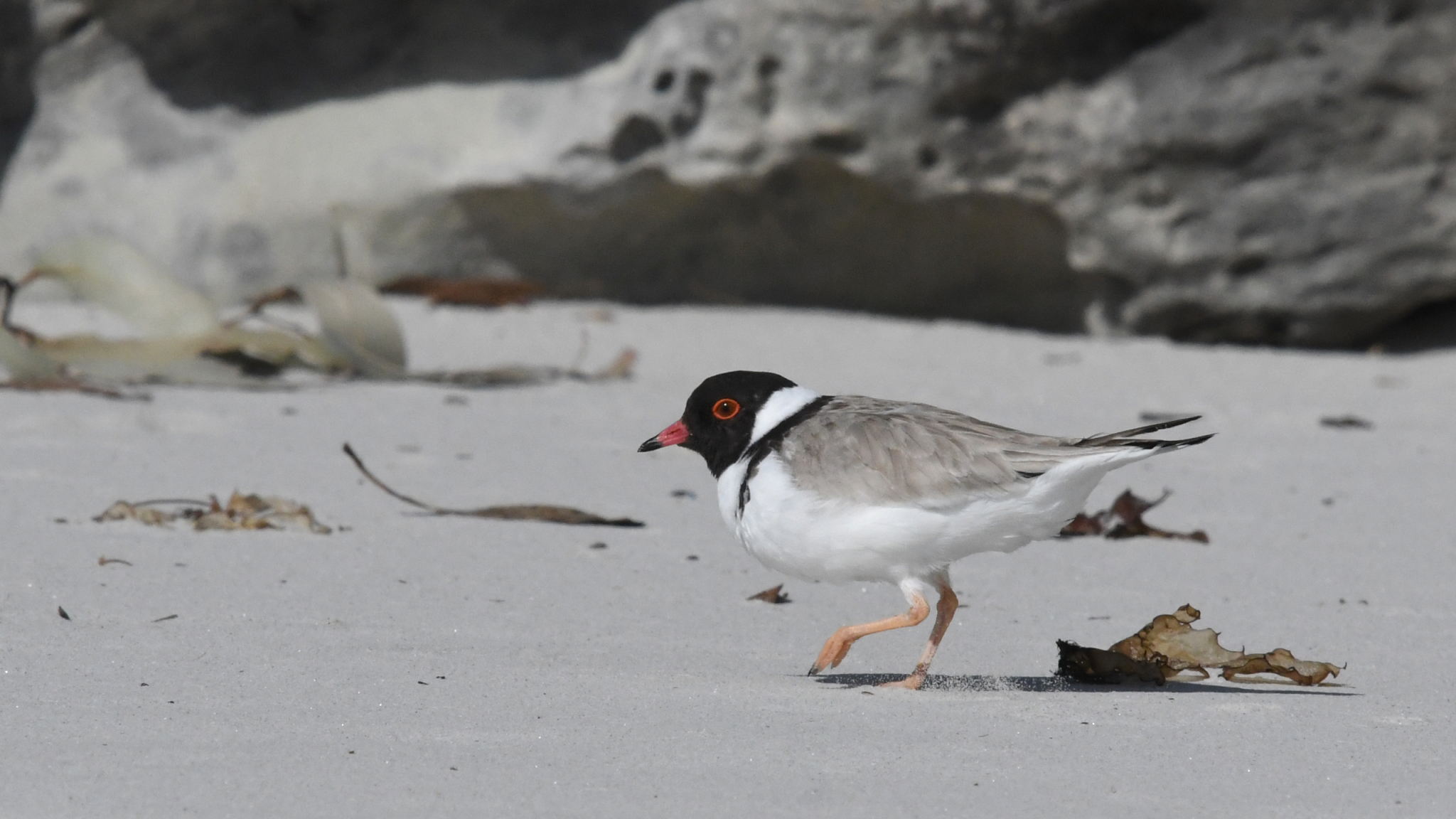
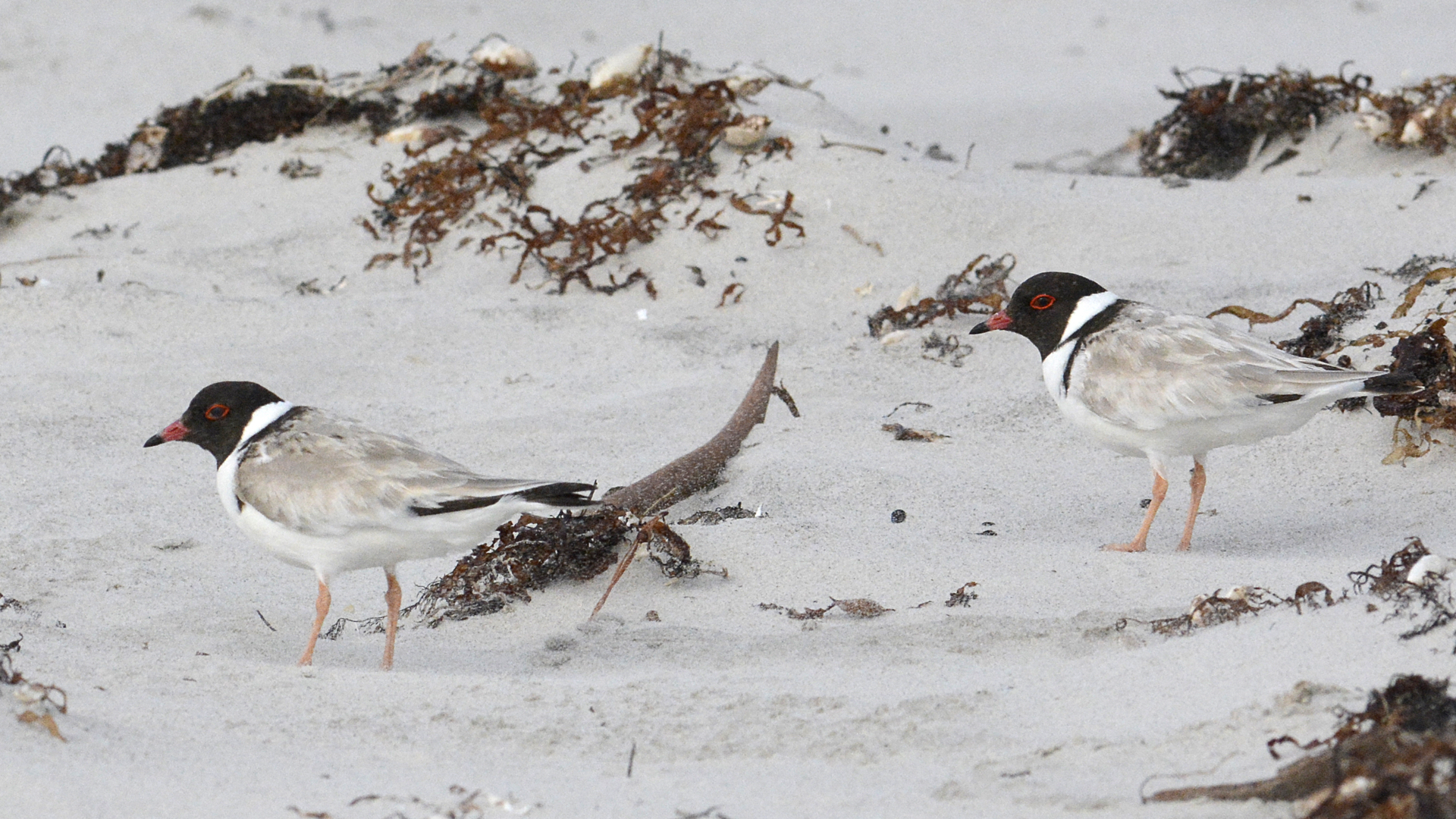
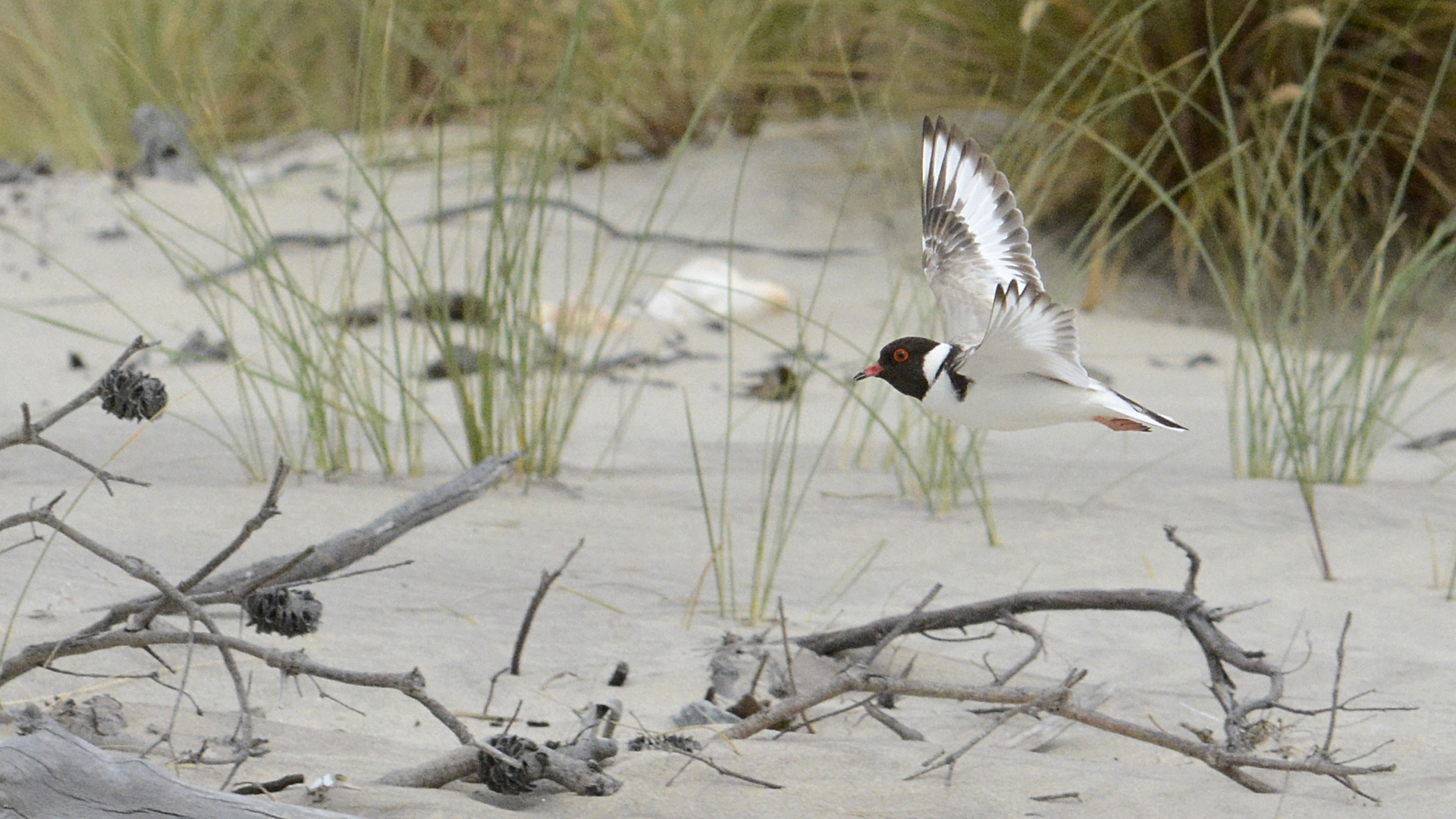
This plover has red eyes and a red beak, with a "hooded" black head that has given rise to its name.
19-23 cm
Their rather small size, black head and red beak.
The hooded plover doesn't migrate.
This bird can be found on the coastline and by lakes near the coast. Hooded plovers primarily inhabit sandy ocean beaches, but their habitat also includes coastal lakes and lagoons.
Hooded plovers are opportunistic feeders that eat a variety of invertebrates, such as crustaceans, molluscs, and insects, as well as plant material like seeds and turions.
They usually breed from August to February and lay 2-3 eggs per season. Both parents incubate the eggs for about 30 days and share the care of the chicks.
Around the lower parts of Australia, including Tasmania.
Vulnerable
Habitat loss and disturbance from human activities such as coastal development, recreation and predation by off-leash dogs. Their eggs are well camouflaged on the sand, making them very vulnerable to human activities on beaches.
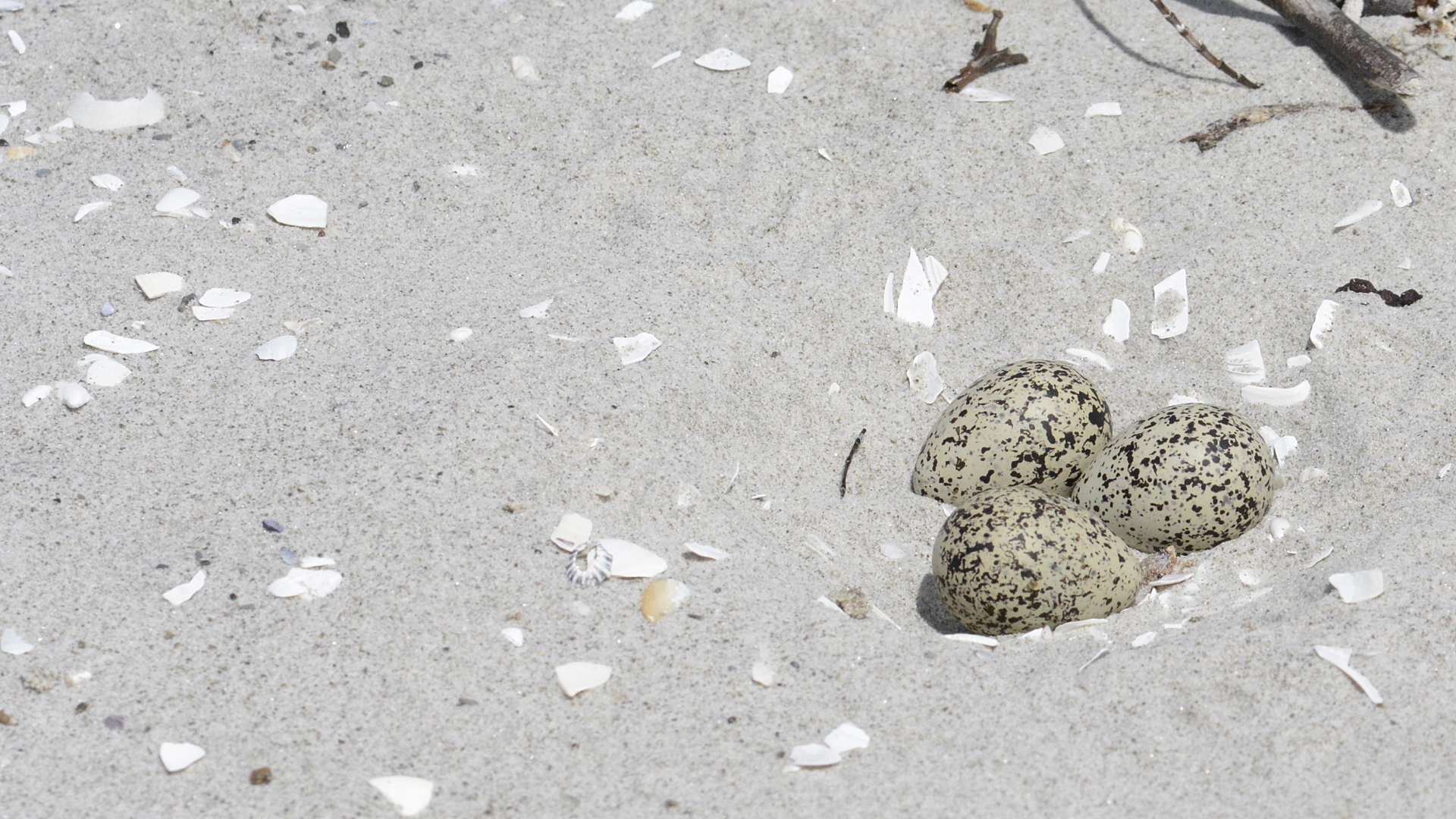
Hodded Plover eggs in the sand. By Dr Eric Woehler
Quiet call and a very low pipe, pipe.
Around the beaches and lakes on the coast of Australia including Tasmania, though if you get lucky you can see them inland as well.
Frequently asked questions about the Hooded Plover
What does the Hooded Plover eat?
Hooded plovers are opportunistic feeders that eat a variety of invertebrates, such as crustaceans, molluscs, and insects, as well as plant material like seeds and turions.
Where can I see the Hooded Plover in Tasmania?
Around the beaches and lakes on the coast of Australia including Tasmania, though if you get lucky you can see them inland as well.
Is the Hooded Plover endangered?
Vulnerable
What does the Hooded Plover look like?
Their rather small size, black head and red beak.
Where does the Hooded Plover live?
This bird can be found on the coastline and by lakes near the coast. Hooded plovers primarily inhabit sandy ocean beaches, but their habitat also includes coastal lakes and lagoons.
What threats does the Hooded Plover face?
Habitat loss and disturbance from human activities such as coastal development, recreation and predation by off-leash dogs. Their eggs are well camouflaged on the sand, making them very vulnerable to human activities on beaches.Hodded Plover eggs in the sand. By Dr Eric Woehler
How does the Hooded Plover breed and reproduce?
They usually breed from August to February and lay 2-3 eggs per season. Both parents incubate the eggs for about 30 days and share the care of the chicks.
You might like...
Swift Parrot
The critically endangered Swift Parrot is a species of broad-tailed parrot only found in south-eastern Australia. Image: Rob Blakers
The Stonechat
The stonechat favours the heathers and gorse bushes, and can be spotted in the same areas as the Dartford warbler.
Forty-spotted Pardalote
One of the world's rarest birds, the Forty-Spotted Pardalote's remaining stronghold is on Bruny Island and Maria Island, off Tasmania
Newsletter
Sign up to keep in touch with articles, updates, events or news from Kuno, your platform for nature