

Observing improving ecology in Simpsons Bay
The ecology of Simpsons bay has improved in recent years. Shorebird numbers here have increased. There are a number of reasons behind this improved ec...
Read more

Blue Gums and Swifties
The Blue Gum – Eucalyptus Globulus – is a very important species of tree for the survival of the Swift Parrot, a critically endangered species that fr...
Read more

Marine and coastal life at Coal Point
At a number of spots along the coastline near Adventure Bay, such as at Coal point, are fascinating rock pools and coastal and marine life.
Read more

Why are beaches curved?
It seems like such a simple question, “why does a beach have a curve on it?”. Yet even small beaches have a curve. This is because the energy of a bea...
Read more

Why is the sand finest at the top of a beach?
When a waves come in, there is an enormous amount of energy, but it loses that energy as it sweeps up the beach, dropping heavier particles first and ...
Read more
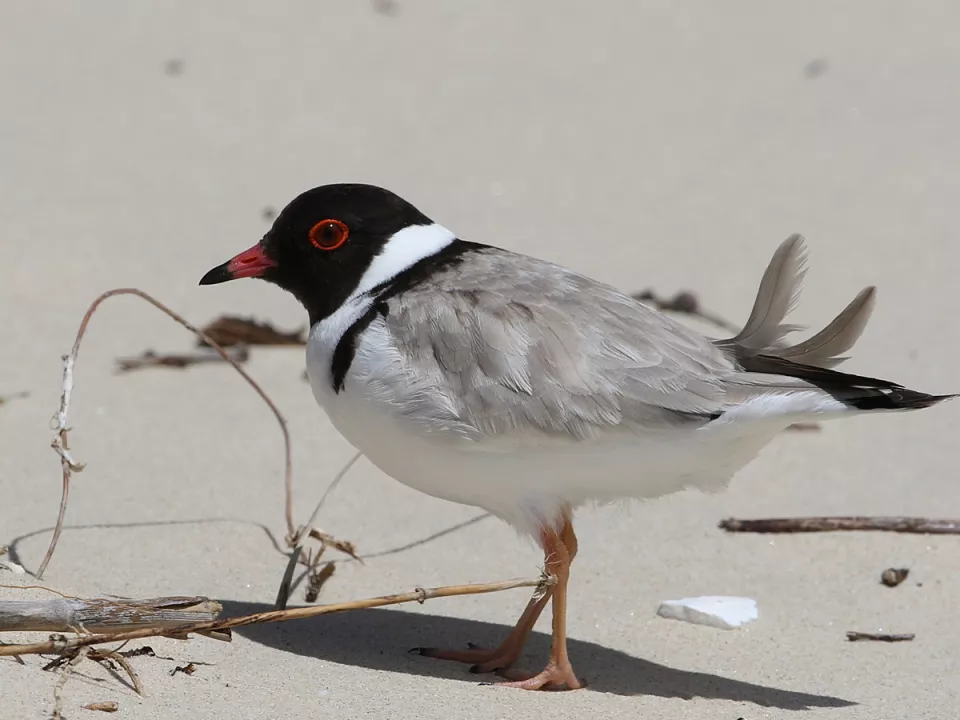
Protecting shorebirds on Bruny Island
Protecting beach birds is not just about focussing on where they might be when they’re breeding. Its about saying – “these birds occupy many beaches”.
Read more
Ecology of the Neck
The neck is just such an incredibly diverse place. From the productive marine environment of Simpson's bay with rich shallow marine fauna, to the many...
Read more

Birds playing in wind at the neck
You quite often see birds, particularly the Pacific Gulls and the New Zealand Kelp Gulls using the wind running over the sand dune at the neck to play...
Read more

A feral cat free Bruny
As a critical haven for birdlife globally, eradicating feral cats from Bruny Island is an important challenge for the island's ecology
Read more

Saving wildlife on Bruny Island's roads
Bruny Island is a haven for wildlife, but increased tourist numbers have led to more native animals being killed on the roads. Here is how to make a d...
Read more

Cloudy Bay's extraordinary ecology
Cloudy Bay is a coastal landscape of extraordinary ecological significance, hosting shorebirds, migratory whales, Rikali (water rats) and exquisite an...
Read more

Slow down and Save Wildlife
Driving very slowly at dawn, dusk and at night, during the hours that native animals are most active is important to protect our native species on Bru...
Read more